Article made by:

12-Month Milestones: What Your 1-Year-Old Should Be Doing

Infants
Article made by:
Infants
Updated November 2026.
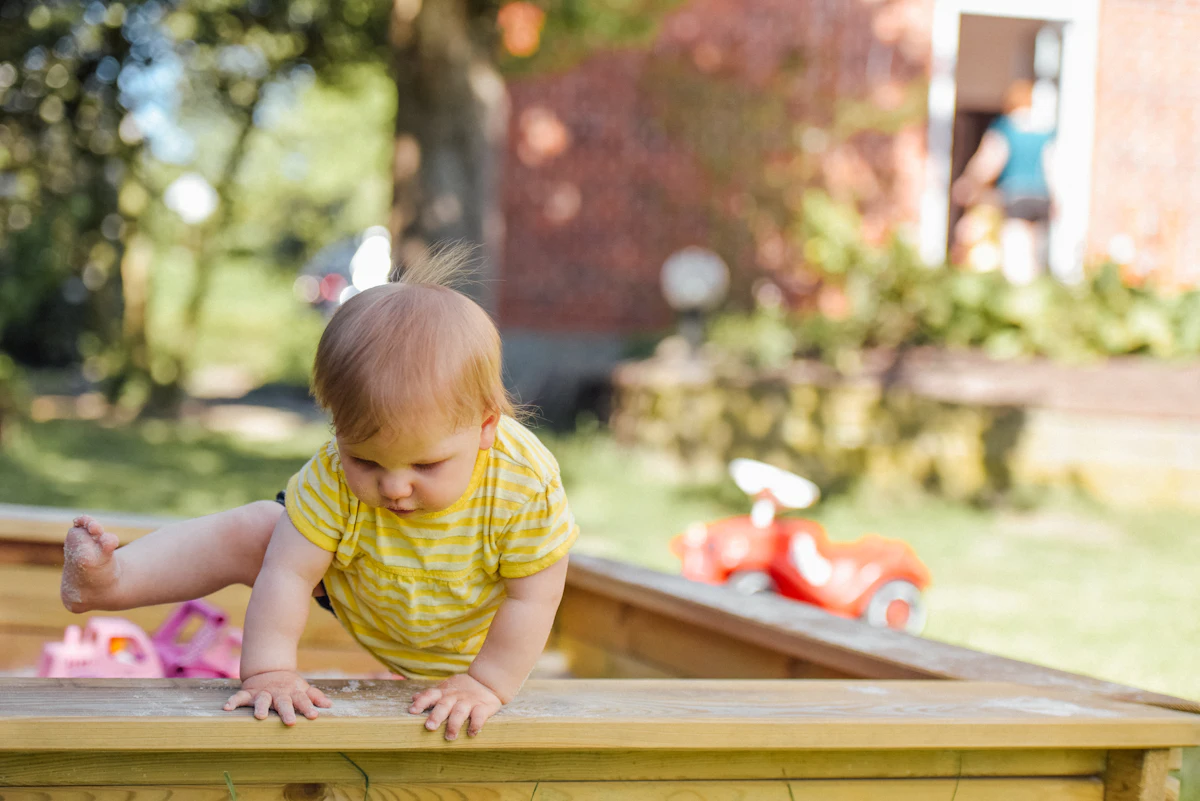
By 12 months, most babies pull up to stand, walk while holding on to furniture, wave bye-bye, call a parent "mama" or "dada," and pick up small bits of food between thumb and finger. Walking alone isn't on the 1-year list. The CDC counts it as a later milestone, so a 1-year-old who isn't walking yet is usually right on track.
Here's the full CDC list, what it looks like day to day, how to help, and when to ask your doctor.
The CDC milestone checklist for 1 year lists skills that 75% or more of children reach by their first birthday. That means most babies do all of these by 12 months, and missing one is worth a conversation with your doctor.
| Area | Most babies by 12 months |
|---|---|
| Social and emotional | Plays games with you, like pat-a-cake |
| Language | Waves bye-bye; calls a parent "mama," "dada" or another special name; understands "no" (pauses or stops when you say it) |
| Thinking | Puts something in a container, like a block in a cup; looks for things they see you hide, like a toy under a blanket |
| Movement | Pulls up to stand; walks holding on to furniture; drinks from a cup without a lid while you hold it; picks things up between thumb and pointer finger |
Walking alone gets the most questions, and it has a wide normal range. The CDC lists taking a few steps alone as a 15-month milestone and walking without holding on as an 18-month milestone. Many babies take first steps around their birthday, and many wait a few more months.
Give your baby lots of floor time, a push toy or sturdy furniture to cruise along, and bare feet indoors. The CDC advises against baby walkers.
Most 1-year-olds use a special name for a parent and understand far more words than they can say. Watch for gestures. Waving, pointing, reaching up to be held and shaking their head are early communication. By 15 months, the CDC expects one or two words besides "mama" or "dada," like "ba" for ball.
Name what your baby points at, narrate your routines, and repeat their sounds back with a little more: "Ba? Yes, ball! A red ball."
Many 1-year-olds feed themselves finger foods and are learning to drink from an open cup with help. Around 12 months, babies can switch from formula to whole cow's milk. The CDC suggests offering water, breast milk or plain milk, and keeping 100% juice to 4 ounces a day or less. See Switching to Whole Milk at 12 Months: Daycare Milk Rules.
In an infant room, 1-year-olds spend a lot of time cruising along low shelves, pulling up on teachers, dropping toys into bins and playing peekaboo. They watch older babies closely and copy them. Some are starting to move from two naps toward one, and from bottles toward cups.
Teachers see your baby for hours every day, alongside other babies the same age. Ask them what they notice. They often spot new skills, and sometimes concerns, early.
Tell your pediatrician if your baby is missing milestones, has lost skills they used to have, or if anything worries you. Ask about a developmental screening. You don't need to wait for the next checkup.
In Illinois, any parent can contact Illinois Early Intervention for a free evaluation for children under 3. You don't need a doctor's referral. See Early Intervention in Illinois: Toddler Speech Delay Help.
Most 1-year-olds pull up to stand, walk holding on to furniture, wave bye-bye, call a parent "mama" or "dada," understand "no" and pick up small foods with thumb and finger.
Yes. The CDC lists walking while holding on to furniture at 12 months, a few steps alone at 15 months and walking without help at 18 months.
Most say "mama," "dada" or another special name for a parent. By 15 months, the CDC expects one or two other words.
Talk with your doctor if your baby misses milestones, loses skills or if something concerns you. In Illinois, you can also contact Early Intervention directly.
Our New Beginnings Program cares for babies from 6 weeks to 15 months, with a primary teacher for each baby, naps and feeds that follow your home routine, and formula and baby food provided. Around 15 months, children move up to our Discovering Yourself Program. Find a location or contact us.
Related reading: 18-Month Milestones: Words, Walking and Red Flags.


