Article made by:

Reggio Emilia Preschool: What It Is and How It Compares

Pre-school
Article made by:
Pre-school
Updated November 2026.
The Reggio Emilia approach is a way of teaching young children that grew out of the public infant-toddler centers and preschools of Reggio Emilia, a city in northern Italy. It sees children as capable, curious learners, builds learning around long projects that come from children's interests, treats the classroom as a teacher, and records children's work so families and teachers can see their thinking. It isn't a set curriculum or a certification, so programs that call themselves Reggio-inspired can look quite different.
The approach developed in the city's municipal schools after World War II, shaped by educator Loris Malaguzzi together with local families and city leaders. According to Reggio Children, the organization the city created in 1994 to share the approach, it has now reached more than 145 countries and territories. Programs outside Italy usually describe themselves as Reggio-inspired.
Many Reggio programs have an atelier, a studio space for art and materials, sometimes led by a teacher with an arts background.
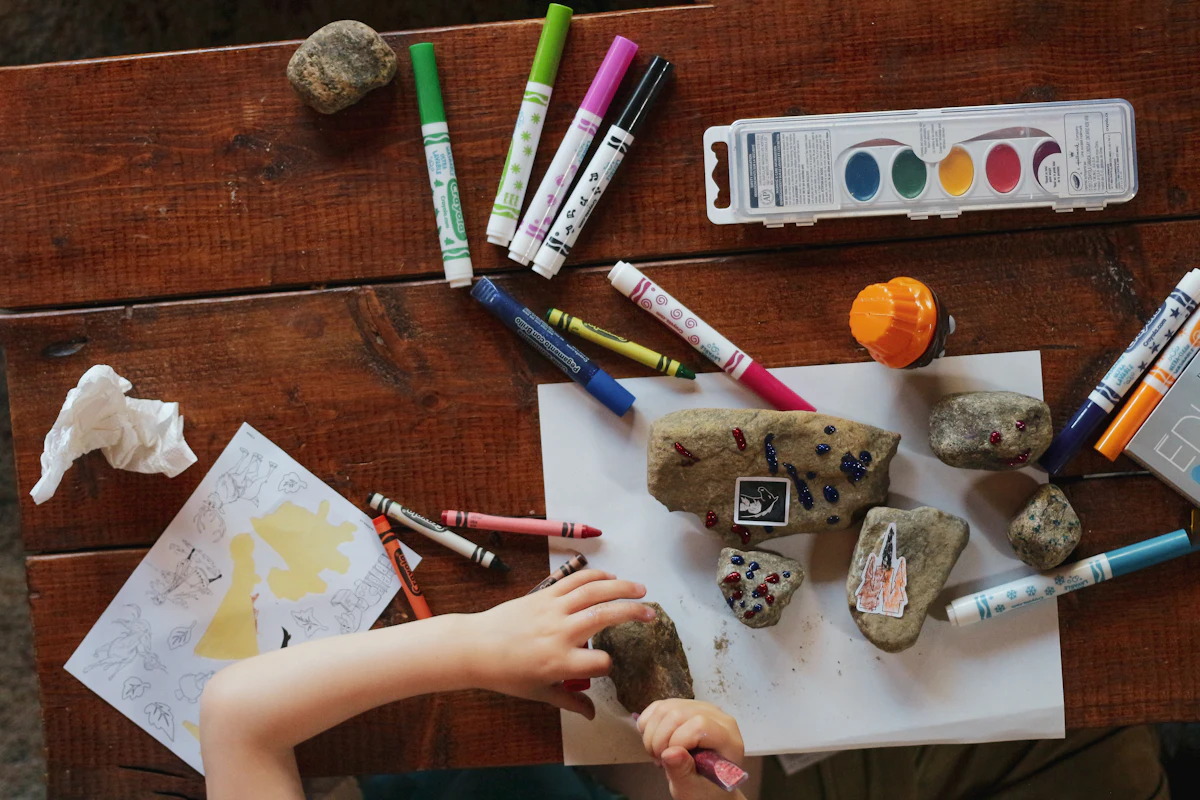
Expect open shelves with baskets of loose parts like stones, fabric, wood pieces and recycled materials. You'll see children's drawings, photos and quotes on the walls, and projects in progress left out for the next day. Teachers ask a lot of questions and listen closely. The schedule has long blocks of play and project time.
| Reggio Emilia | Montessori | |
|---|---|---|
| Origin | Municipal schools in Reggio Emilia, Italy | Dr. Maria Montessori, Rome, early 1900s |
| Curriculum | Emerges from children's interests and projects | Planned sequence with specific Montessori materials |
| Group work | Lots of small-group projects | More individual, self-chosen work |
| Teacher role | Co-learner and researcher | Guide who presents materials |
| Art | Central, often with a studio | Part of the day, less central |
| Teacher training | No single credential | Montessori teacher training programs |
Both respect children's independence and use beautiful, organized spaces. See Montessori vs Play-Based vs Academic Preschool.
Reggio-inspired programs often suit children who are curious, love building and art, and enjoy working with others. Families who want a set academic plan or worksheets may prefer another style. Research on Reggio programs specifically is limited, partly because each program applies the ideas differently. Look closely at the quality of teacher-child conversations and the daily schedule, more than the label.
A teaching approach from the public preschools of Reggio Emilia, Italy, built around children's interests, long projects, a rich environment and documentation of learning.
Reggio builds learning from children's projects and group work, while Montessori uses a planned sequence of specific materials and more individual work.
Yes. Learning happens through play, exploration and projects, with teachers guiding and documenting.
There is no single certification. Programs outside Italy usually call themselves Reggio-inspired.
Children's Land classrooms include music and art at every location, and our preschool programs build social-emotional skills through daily routines and free play. Our Independence Journey Program serves 3- to 4-year-olds. Ask your location's director what a day looks like. Find a location or contact us.
Related reading: Pre-K Curriculum in Illinois: What Pre-K Kids Learn.


