Article made by:

Fine Motor Skills by Age: 2, 3 and 4-Year-Olds

Pre-school
Article made by:
Pre-school
Updated November 2026.
Fine motor skills are the small movements of the hands and fingers. Most 2-year-olds can unscrew a lid and copy a line, most 3-year-olds string large beads and draw a circle when shown how, and most 4-year-olds hold a crayon with fingers and thumb, unbutton buttons and use scissors. Each child develops at their own pace, so look at the overall pattern, not one skill.
This guide uses the CDC milestone checklists and the occupational therapy milestones from Lurie Children's Hospital of Chicago.
At 2, children use both hands together and start to control a crayon. According to the CDC, most 2-year-olds hold something in one hand while using the other, like holding a container and taking off the lid, and eat with a spoon. Lurie Children's lists these skills for toddlers around 2:
Most 2-year-olds still hold a crayon in their fist. That's normal at this age.
Between 2 and 3, Lurie Children's says children start to snip with scissors and imitate a cross, and some begin to show a hand preference. By 3, the CDC checklist includes:
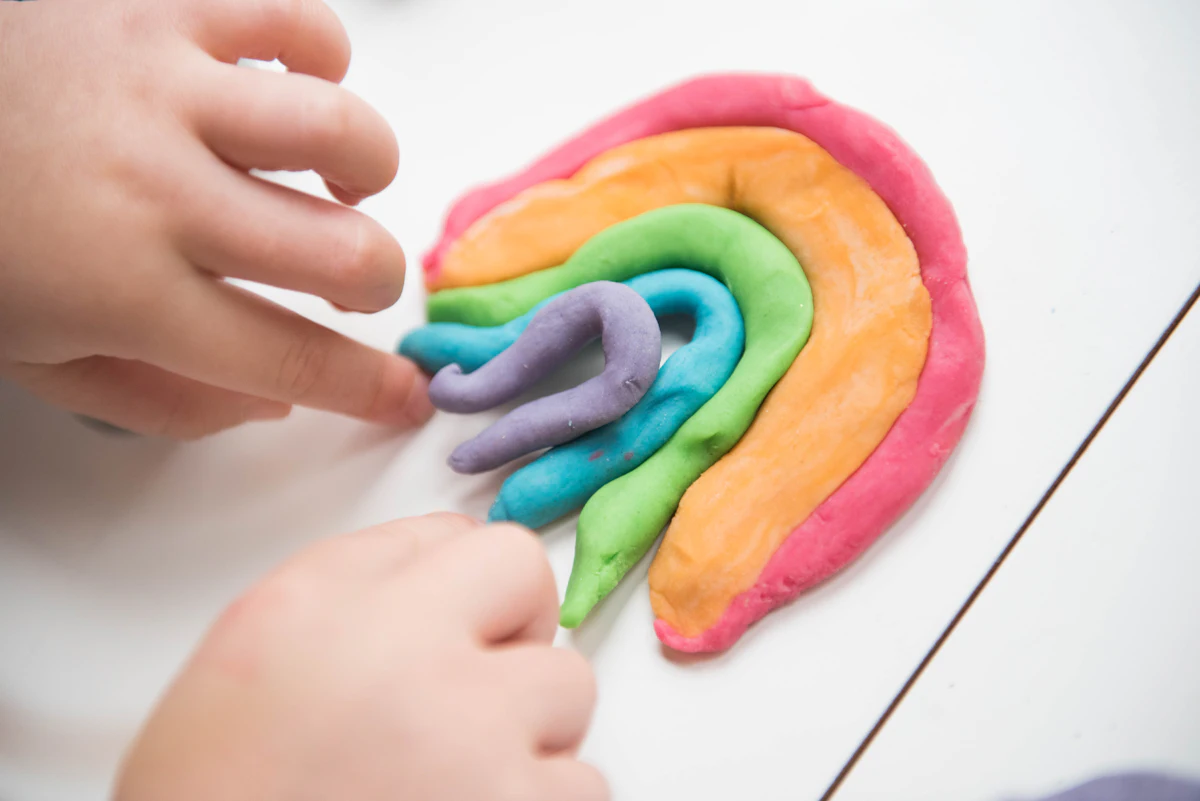
Three-year-olds love playdough, stickers, puzzles with a few pieces and painting with big brushes. All of these build hand strength.
By 4, the CDC says most children hold a crayon or pencil between fingers and thumb, unbutton some buttons, pour water and serve food with supervision, and draw a person with at least three body parts. Lurie Children's lists these skills for ages 3 to 4:
Lurie Children's also says hand preference is usually set by 4.
By 5, most children button some buttons and write some letters in their name, according to the CDC. Lurie Children's lists cutting out a square, copying a triangle, writing their name and drawing a person with six or more body parts for ages 5 to 6. See How to Hold a Pencil: Grip Stages Before Kindergarten.
Short, frequent play fits this age better than long worksheet sessions. Many preschool art and play centers are built around exactly these activities.
Talk with your pediatrician if your child avoids using their hands, gets very frustrated with small objects, can't hold a crayon by 3, or has lost skills. Lurie Children's recommends an occupational therapy evaluation if you're worried about fine motor skills. Your school district also offers free screening for children 3 to 5. See Free Preschool Screening in Illinois: How Child Find Works.
Most 3-year-olds string large beads, draw a circle when shown how, use a fork and put on some clothes alone, according to the CDC.
Many children begin to snip with scissors between 2 and 3. Cutting out a circle is listed for ages 3 to 4.
Yes. Most toddlers use a fisted grip. By 4, most children hold a crayon between their fingers and thumb.
Playdough, stringing beads, stickers, tongs, tearing paper, drawing on an easel and pouring all build hand strength and control.
Music and art are part of the routine at every Children's Land location, and our Exploring the World Program for 2-year-olds and Independence Journey Program for 3-year-olds give children daily time for hands-on play. Ask your location's director what a typical day looks like. Find a location or contact us.
Related reading: How to Hold a Pencil: Grip Stages Before Kindergarten.


